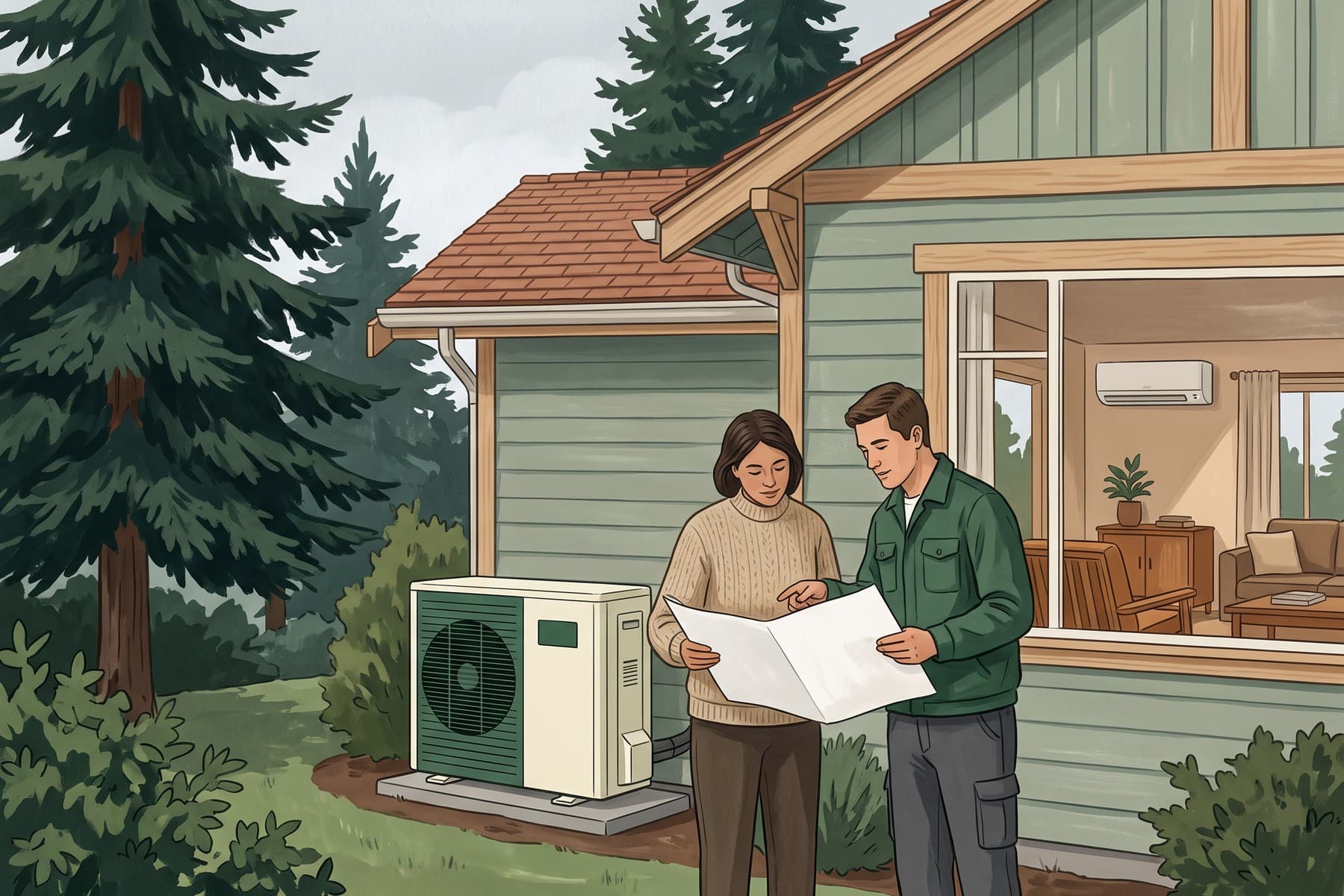
Use the utility and current heater to choose a pathway.
Start with your electric utility and whether the home currently uses electric resistance, gas, oil, or an existing heat pump. A PSE replacement program, a PUD conversion offer, and a state-funded assistance program can have different conditions.
For a western Washington home adding cooling, map the rooms you want to serve and ask about closed-bedroom coverage. For an eastern Washington home, request the actual winter design condition and equipment output. Have the bidder use the house and address rather than a single statewide assumption.
PSE customers replacing a heat pump can use our PSE heat-pump replacement guide alongside this broader planning checklist.
Snohomish PUD has an electric-heating pathway.
Snohomish County PUD lists ducted conversion rebates of $1,800 and qualifying inverter-driven ducted rebates of $2,500. Electric heat must be the primary heating source, and work must be completed by a PUD-registered contractor.
The contractor includes eligible savings in the initial bill and submits the documentation for PUD review. Confirm the home type, ratings, and exact category before signing. A gas-heated home or a customer outside PUD territory should not assume these amounts apply.
Snohomish PUD: heating and cooling rebates · Source checked 2026-09-06
Washington’s state-funded HEAR program is locally administered.
Commerce’s state HEAR page directs households to local administrators. It describes income eligibility up to 150% of county area median income, but notes that individual administrators may offer different measures and eligibility within the program.
Use the administrator list to check whether your area is served, which heat-pump projects are supported, and the required sequence. Ask about funding and approval before purchase. A grant awarded to an organization is not a rebate already reserved for your household.
Washington Commerce: state-funded HEAR program · Source checked 2026-09-06
Keep the federal rollout distinct from state-funded HEAR.
Commerce’s separate IRA Home Energy Rebate page says it is evaluating the June 2026 federal guideline changes with its administrator. It directs residents to the existing state-funded HEAR route while that work continues.
The similar names do not make these one program. Have the installer or administrator identify the funding source, eligible project, and actual approval. Do not combine a prospective federal award with a current local offer without confirmation.
Washington Commerce: federal IRA rebate status · Source checked 2026-09-06
Compare the full comfort plan and handover.
Require a room map, winter load, heat-pump output, backup controls, electrical scope, and outdoor mounting/drainage details. For a ductless cooling project, ask how filtration and closed-room comfort will be handled; equipment selection alone does not define either.
Compare gross price, approved program help, and remaining cost separately. Obtain the matched-system certificate, startup results, owner maintenance instructions, and submission receipt. If the project changes after a reservation, have the administrator verify the revised plan before installation.
Bring a clear project brief to your installer.
Sources checked September 6, 2026. Confirm current funding and installation-date rules with the administrator before signing. These are selected local pathways, not an exhaustive rebate list.
Start a heating and cooling request with your existing equipment, utility, and comfort priorities. Temperaly does not approve rebates; a request is not an appointment.
Editorial review: 2026-09-06