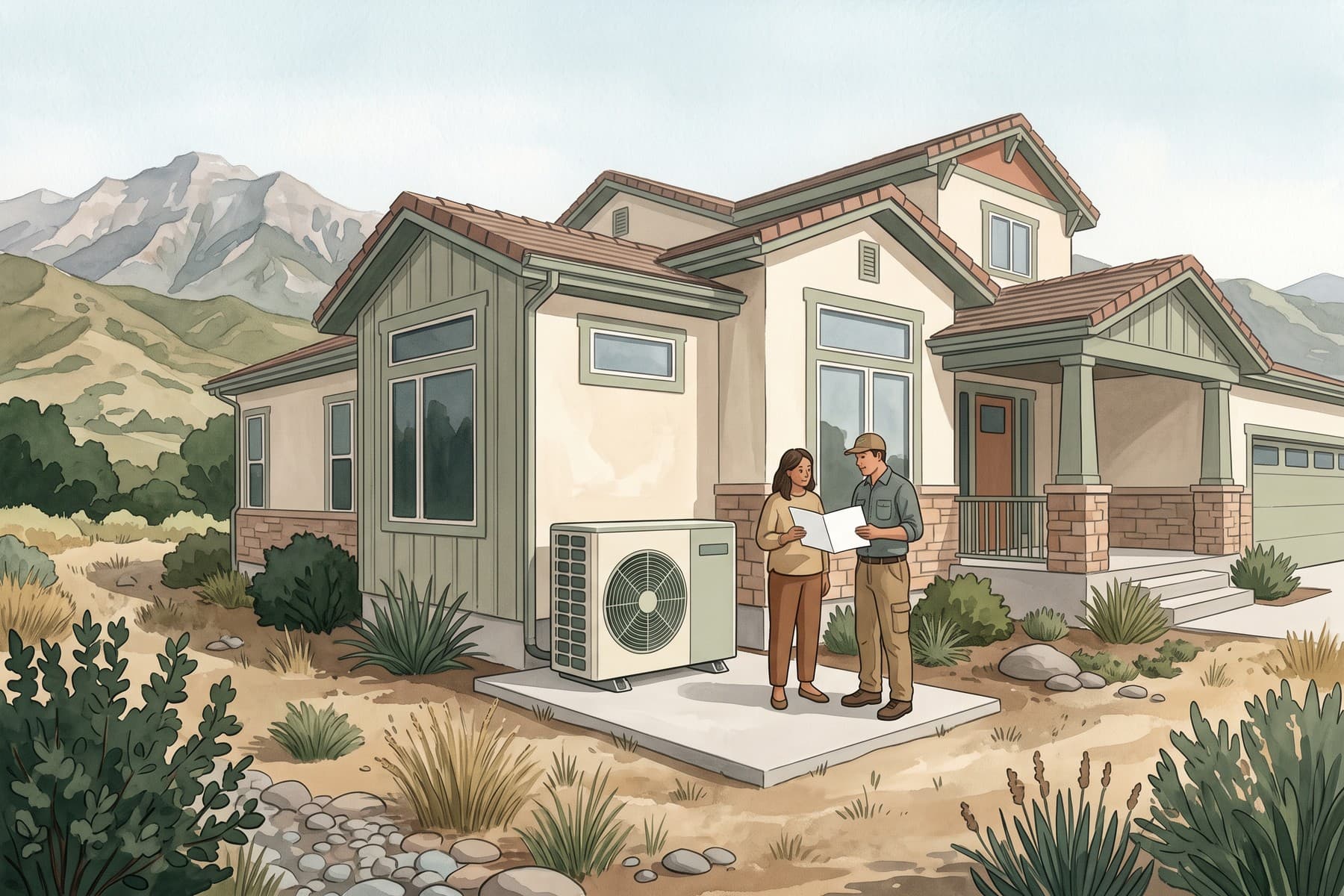
Start with the old heat source and the new scope.
A replacement heat pump, conversion from electric resistance heat, and dual-fuel project with a gas furnace can fall into different incentive categories. Tell the contractor exactly what heats the home now and whether it will remain.
For a Wasatch Front home, ask for the winter design condition and the equipment’s output at that point. For a southern Utah home, also ask for cooling output at the selected summer condition. Use the actual property’s load calculation rather than an assumption based on the state alone.
Wattsmart’s air-source schedule distinguishes conversions and upgrades.
Rocky Mountain Power’s Utah air-source page lists a $450 qualifying cold-climate upgrade and electric-resistance conversion tiers of $1,200, $1,400, and $1,600. The equipment and home requirements differ by tier.
This page excludes gas, oil, wood, pellet, and propane conversions from its electric-resistance category. It requires an eligible existing home, approved rate, program-eligible contractor, and qualifying primary-heating coverage; manufactured homes are excluded from this particular offer. Confirm the exact category and application timing before purchase. Do not use this conversion amount for a different project simply because the new equipment is a heat pump.
Wattsmart Utah: air-source rebates and qualifications · Source checked 2026-09-06
Dual fuel has its own program row.
The Wattsmart Utah rebate chart lists a separate dual-fuel category for eligible natural-gas and propane arrangements. It distinguishes AHRI-rated pairings from a different non-AHRI category and separates customer payments from trade-ally payments.
Ask the contractor to identify the complete furnace-and-heat-pump pairing and the precise row it meets. Have the administrator verify the current requirements and amount. Do not add the trade ally’s incentive to your homeowner rebate or combine incompatible upgrade categories.
Wattsmart: Utah rebate chart · Source checked 2026-09-06
Compare the controls and rates, not just efficiency labels.
Require the house load, cold-weather output, and backup contribution on both an all-electric and dual-fuel bid. Ask how the thermostat decides when backup runs and who verifies that sequence at startup.
Use your actual electric tariff and gas or propane price. If other appliances still use gas, keep the fixed gas charges in the calculation. Ask for heating and cooling electricity separately and have the bidder identify assumptions about occupancy and indoor temperatures.
Finish the scope before subtracting the rebate.
List indoor equipment, outdoor equipment, thermostat, electrical work, duct corrections, permits, mounting, drainage, and startup testing. Have the installer check the actual site’s access and local requirements.
Keep a gross-price option alongside the verified net price. Before the final payment, obtain the equipment certificate, invoice, owner operating instructions, and application receipt. Recheck any equipment substitution because the final pairing may change both performance and eligibility.
Bring a clear project brief to your installer.
Sources checked September 6, 2026. Confirm current funding and installation-date rules with the administrator before signing. These are selected local pathways, not an exhaustive rebate list.
Start a heating and cooling request with your existing equipment, utility, and comfort priorities. Temperaly does not approve rebates; a request is not an appointment.
Editorial review: 2026-09-06