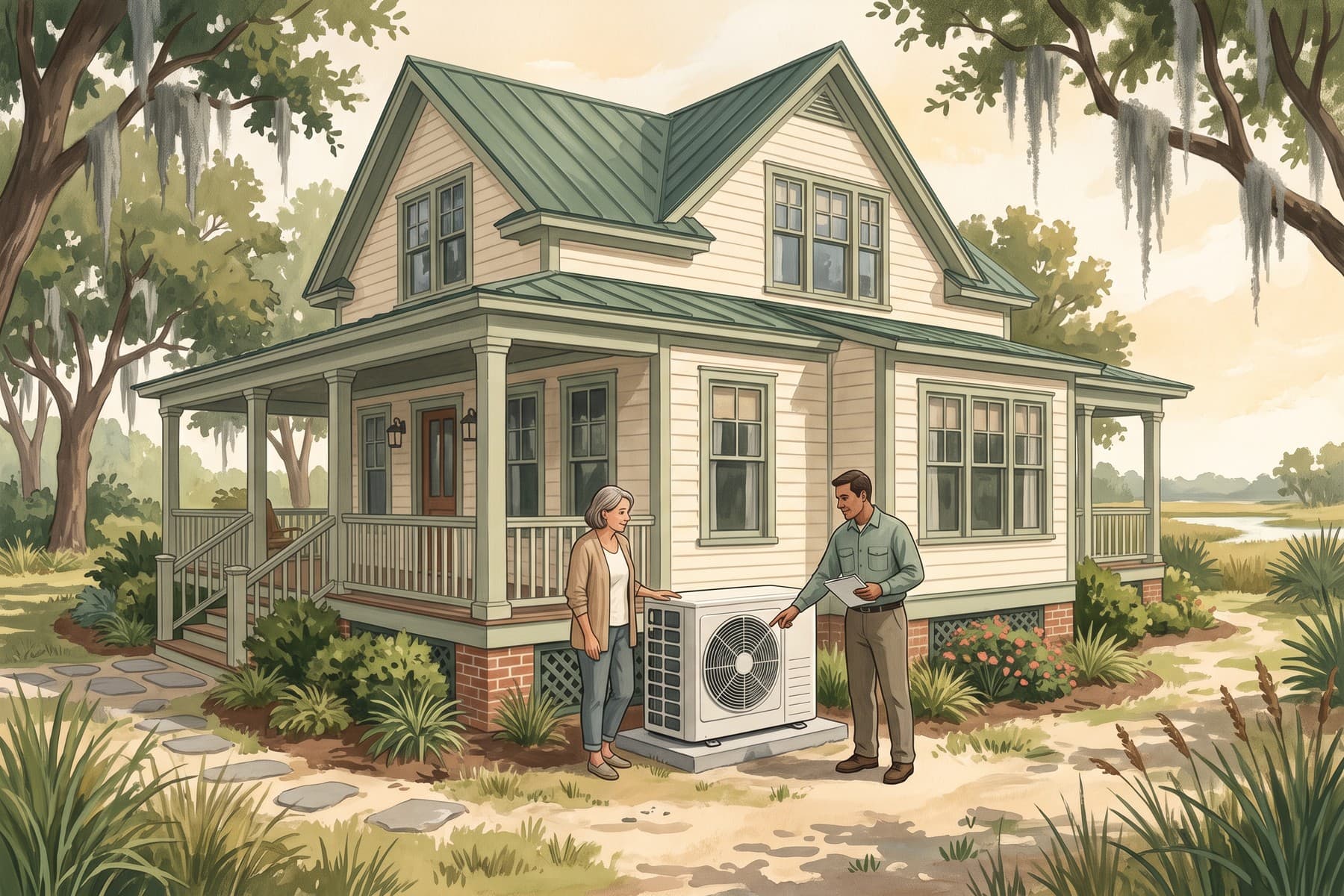
Treat replacement and conversion as different projects.
Replacing an existing heat pump, converting an electric furnace, and adding cooling to a room are different scopes. Tell both the contractor and utility which one you have before comparing incentives.
For a coastal home, ask about the outdoor unit’s exposure and maintenance. For an inland home with damp rooms, ask how the design handles moisture at light cooling demand. Give the installer the room complaints and require a calculation for your address rather than a statewide sizing rule.
Dominion’s $650 offer is for electric-furnace replacement.
Dominion Energy South Carolina lists a $650 rebate when an eligible residential electric customer replaces an electric furnace with a qualifying ENERGY STAR heat pump. That condition matters: replacing an existing heat pump or keeping a gas furnace is not the same advertised measure.
Have the utility or installer confirm the account, existing heater, matched equipment, and current requirements before counting the rebate. Ask for the applicable application and its deadline, and keep proof of what was removed as well as what was installed.
Dominion South Carolina: electric-furnace conversion · Source checked 2026-09-06
Other work has separate rebate categories.
Dominion’s South Carolina heating-and-cooling hub separates equipment replacement, electric-furnace conversion, duct improvements, and heat-pump water heaters. Use the category for your actual work and ask which combinations the program allows.
If your utility is Duke, Santee Cooper, a cooperative, or another provider, begin with that company’s program instead. A South Carolina address does not make a Dominion amount available, and a water-heater rebate should not be counted toward space-conditioning equipment.
Dominion South Carolina: heating and cooling rebate categories · Source checked 2026-09-06
Put coastal placement and moisture control in the scope.
Ask for the manufacturer’s clearances, corrosion-care instructions, warranty conditions, and access for service. Have the contractor verify local permit and floodplain requirements for the property and explain the proposed pad or elevated stand.
For indoor comfort, request an accessible condensate path, filter location, return-air review, and explanation of humidity control. Ask how the selected system behaves when the outdoor temperature is moderate but the house still feels damp. Do not make a larger unit the default answer to every complaint.
Compare net costs only after matching the work.
List the indoor and outdoor equipment, controls, backup heat, electrical changes, ducts, mounting, permits, and startup testing. Require the same room coverage from each bid and the same energy-rate assumptions in any operating estimate.
Keep gross price, confirmed rebate, contractor discount, and financed balance separate. At completion, obtain the certificate for the actual equipment pairing, startup results, application receipt, and a demonstration of normal and backup heating. Recheck eligibility if the contractor substitutes a model.
Bring a clear project brief to your installer.
Sources checked September 6, 2026. Confirm current funding and installation-date rules with the administrator before signing. These are selected local pathways, not an exhaustive rebate list.
Start a heating and cooling request with your existing equipment, utility, and comfort priorities. Temperaly does not approve rebates; a request is not an appointment.
Editorial review: 2026-09-06