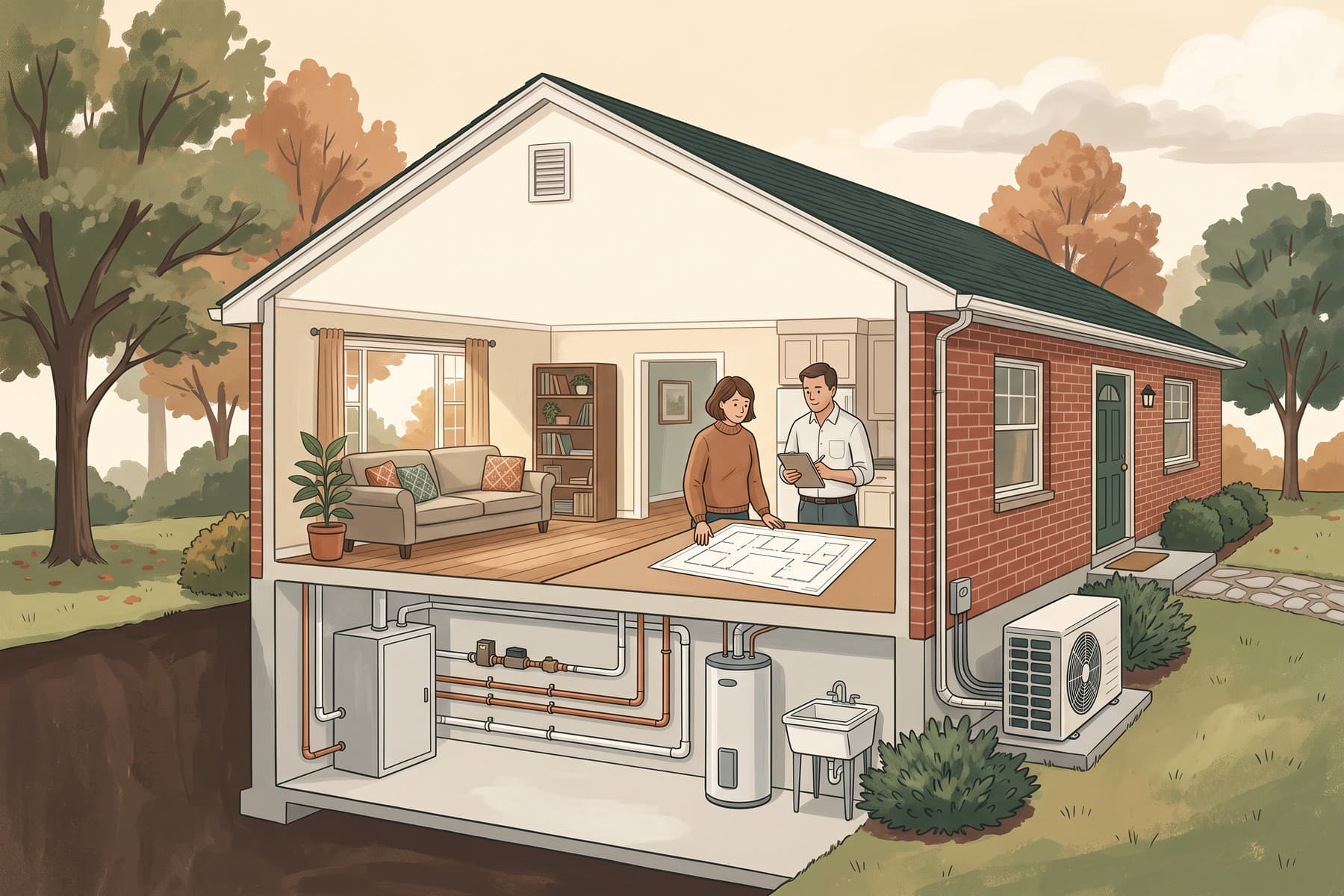
The existing heating system determines the conversion work.
A Pennsylvania heat-pump proposal should say which rooms the new system will serve and what happens to the equipment already in the home. Replacing an AC attached to a furnace is a different project from adding cooling to a house heated through radiators.
Start by writing down the fuel, type of heat distribution, age and condition of the current system, and whether it also makes domestic hot water. Give the same information to every bidder. A single equipment price does not describe a complete conversion.
Ask for a room-by-room coverage plan.
If you already have usable ducts, ask the installer to evaluate airflow and the proposed matched equipment. If you have radiators and no cooling ducts, ask for a room-by-room comparison of ductless units and new ductwork. Neither option should leave closed bedrooms out of the design.
Where existing heat will remain, require a control plan that explains when each system operates. The controls and the intended switchover behavior should be documented, rather than left to two thermostats competing for the same rooms.
DOE Building Science Education: heat pumps with existing heat · Source checked 2026-09-06
Compare delivered fuel costs with the added electric load.
Use actual oil or propane delivery records, gas bills, and electric bills. Ask for an estimate that distinguishes heating, cooling, and backup operation. Have the installer identify the winter conditions and indoor temperature used in the calculation.
Do not compare the entire old fuel bill with only the heat pump’s space-heating electricity if the old boiler also supplies hot water. Likewise, do not count gas customer charges as savings if the account stays active for cooking or another appliance.
Treat these as comparison questions for your own project. A statewide annual-savings figure cannot substitute for your fuel price, house, and proposed system.
PPL currently lists $225 or $325 for a qualifying ducted heat pump.
PPL’s current air-source heat-pump page lists two rebate tiers. It requires ENERGY STAR certification and an AHRI-rated complete system; documentation for a lone outdoor unit is insufficient. New construction is excluded.
The page also says the application deadline for equipment installed on or before May 31, 2026 has passed. Use the current application for your installation date. Before signing, ask the contractor to provide the complete matched-system certificate and identify the tier and application deadline that apply to your account.
PPL Electric: air-source heat-pump rebates · Source checked 2026-09-06
Ask PPL to confirm all three efficiency ratings.
The posted PPL thresholds are:
| Tier | SEER2 | EER2 | HSPF2 |
|---|---|---|---|
| 1 | At least 15.2 | At least 11.7 | At least 7.8 |
| 2 | At least 16.3 | At least 12.9 | At least 8.2 |
Have the installer match these to the complete AHRI certificate and current rebate form. A SEER2 number by itself does not establish eligibility. This is a PPL example, not a rebate available to every Pennsylvania utility customer.
PPL Electric: air-source heat-pump rebates · Source checked 2026-09-06
Penn Energy Savers is still preparing to launch.
Pennsylvania DEP says it is revising the program following DOE’s June 1, 2026 guidance before launching for consumers. The Penn Energy Savers website collects requests for updates. Do not treat a proposed maximum or older launch date as an available discount, particularly when planning a change from fossil-fuel heating.
Pennsylvania DEP: Penn Energy Savers launch update · Source checked 2026-09-06
Make the handover part of the scope.
Ask each bidder to record:
- Which rooms have heating and cooling, including bedrooms with doors closed.
- Whether the boiler, furnace, fuel tank, or chimney stays in use.
- Whether domestic hot water needs a separate solution.
- The electrical, duct, piping, drainage, and permit work included.
- How retained heat and the new system coordinate.
- Which utility offer applies and who submits the paperwork.
- The startup measurements, controls instructions, and warranty documents you receive.
If an old system is being removed, request its removal and any required disposal work as an explicit line item. Ask for an alternative bid retaining it when that is a practical option.
Keep old tax-credit promises out of a new quote.
The federal 25C home-improvement credit ended for property placed in service after December 31, 2025. Exclude it from a 2026 installation budget.
IRS: Form 5695 instructions, credit termination · Source checked 2026-09-06
Turn the research into a clear next step.
Sources checked September 6, 2026. Offers can change; confirm the installation-date rules and funding with the program before committing. Temperaly does not approve rebates.
Bring the questions above to your installer, or start a heating and cooling request. A request is not an appointment or a rebate application.
Editorial review: 2026-09-06