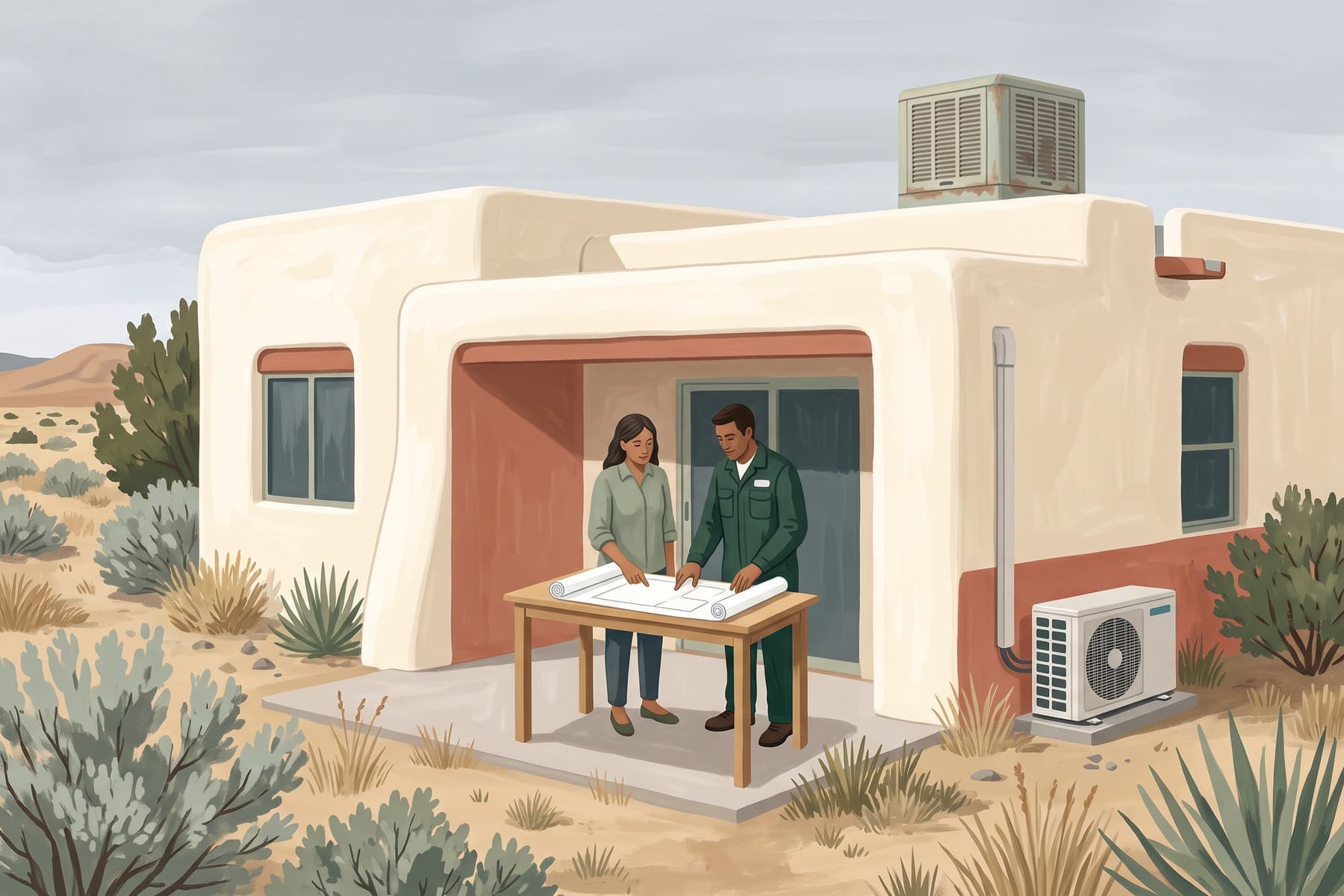
Decide which problem you want the conversion to solve.
Write down whether you need better cooling during humid weather, heating as well as cooling, closed-window operation, or comfort in rooms the present system misses. Ask for both an improvement to the existing arrangement and a heat-pump option where appropriate.
DOE identifies evaporative cooling as one possible cooling approach alongside heat pumps and emphasizes the role of insulation, windows, shade, and ventilation. For your New Mexico home, ask the designer to evaluate those features before sizing replacement equipment. A system choice should answer the actual comfort problem.
DOE: home cooling approaches · Source checked 2026-09-06
Use New Mexico’s state application pathway before purchasing.
EMNRD’s Home Energy Rebate FAQ says the program has begun and directs residents to the state’s clean-energy portal. Household eligibility and the qualifying measure determine access; a posted maximum is not a guaranteed payment for every replacement.
Start with the current application instructions and ask whether your existing equipment and proposed fuel change qualify under the current rules. Confirm reservation, contractor, and installation requirements before a deposit. Keep the approved amount separate from any additional state tax incentive or utility offer, and verify whether they can be combined.
New Mexico EMNRD: Home Energy Rebate FAQ · Source checked 2026-09-06
An evaporative-cooler conversion needs a distribution plan.
Ask the contractor to inspect the existing ducts rather than assume they can be reused unchanged. Require a written supply-and-return design for the heat pump, plus the location of indoor equipment, electrical work, and the treatment of the old cooler, water line, roof opening, or wall penetration.
For a home without suitable ducts, compare a ductless or compact-ducted approach room by room. Ask how bedrooms are conditioned when doors are closed and whether the existing heater remains. Put restoration work and weatherproofing in the price.
Compare local climate and utility costs without a statewide average.
For an Albuquerque-area home, ask which summer and winter design conditions were used. For a higher-elevation property, request its own heating calculation. If evaporative cooling remains an option, include its actual water use, seasonal service, and the days it does not meet your comfort target in the comparison.
For the heat-pump proposal, request expected electricity for heating and cooling separately, including backup. Use your actual rate plan. Do not compare the entire existing heating bill with a small supplemental unit’s projected electricity.
Use a before-and-after scope list.
Record what equipment stays, what is removed, which rooms gain cooling, and how heat is supplied in winter. Ask who owns each permit, electrical task, water-line task, and roof or wall repair.
Keep a gross project price, confirmed program amount, and remaining cost. Obtain a matched-system certificate, startup testing, owner instructions, and application receipt. If equipment substitutions or project timing change, have the program recheck eligibility before work proceeds.
Bring a clear project brief to your installer.
Sources checked September 6, 2026. Confirm current funding and installation-date rules with the administrator before signing. These are selected local pathways, not an exhaustive rebate list.
Start a heating and cooling request with your existing equipment, utility, and comfort priorities. Temperaly does not approve rebates; a request is not an appointment.
Editorial review: 2026-09-06