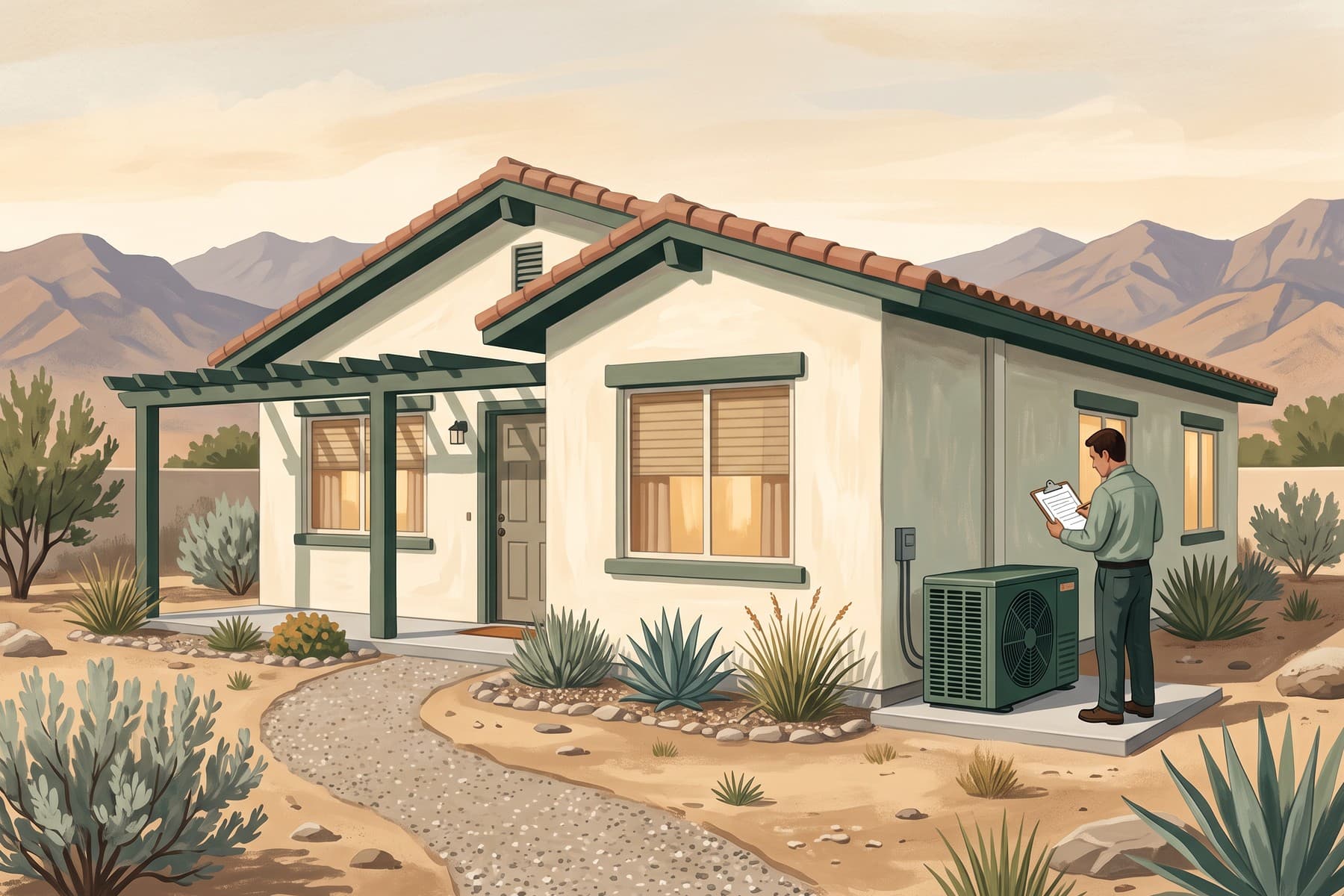
A Las Vegas bid and a Reno bid need different assumptions.
Ask the installer to name the outdoor temperatures used to size heating and cooling at your actual Nevada address. For a Las Vegas-area home, request the system’s cooling output under the chosen summer design conditions. For a Reno-area home, also request cold-weather heating output and the backup plan.
Do not use another home’s tonnage or a statewide square-foot rule as the design. Give the contractor your shade, window, insulation, room-use, and comfort information. Ask whether planned home improvements change the required capacity.
Check NV Energy’s residential AC pathway.
NV Energy’s current residential air-conditioning page lists 2026 incentives and requires heat-pump equipment to meet at least 15.2 SEER2 and 7.8 HSPF2. Have the program or participating installer verify the exact system, property, and regional eligibility before including a rebate.
Use the residential category for your service territory and distinguish equipment replacement from tune-ups or broader home improvements. The current application and program confirmation should supply your project’s amount; an old promotional maximum is not an approval.
NV Energy: residential AC and heat-pump program · Source checked 2026-09-06
Keep utility-program choices attached to the account.
NV Energy’s PowerShift hub separates several efficiency offerings, including AC work and income-qualified options. Use the hub and your account information to identify the path before commissioning work.
If you are served by another Nevada utility or cooperative, request its own current schedule. If the proposed rate has time-based or demand-related charges, ask the utility to explain them and have the bidder use those terms in the cost comparison. Equipment efficiency alone does not define the monthly bill.
NV Energy: PowerShift program hub · Source checked 2026-09-06
Ask for a two-season equipment worksheet.
| Design question | What should be attached |
|---|---|
| Can it cool at the selected hot-day condition? | Manufacturer performance data |
| What heat does it deliver on the winter design day? | Matched-system heating output |
| What supplies any remaining heat? | Backup size and controls |
| Can existing ducts handle the proposal? | Inspection and correction scope |
| What changes electrically? | Circuit and panel assessment |
For an outdoor location near walls or landscaping, ask the installer to show service and airflow clearances. Include drainage, mounting, and maintenance access in the drawing.
Compare the project, then subtract verified help.
Have each bid include indoor equipment, outdoor equipment, thermostat, electrical work, duct corrections, permitting, disposal, and startup testing. Ask for expected heating and cooling electricity separately, using the same rate assumptions.
Before the final payment, check installed model numbers against the proposal and application. Request owner instructions for normal operation and backup, the startup record, and a copy of rebate paperwork. Confirm whether a substitution requires a new eligibility check before accepting one.
Bring a clear project brief to your installer.
Sources checked September 6, 2026. Confirm current funding and installation-date rules with the administrator before signing. These are selected local pathways, not an exhaustive rebate list.
Start a heating and cooling request with your existing equipment, utility, and comfort priorities. Temperaly does not approve rebates; a request is not an appointment.
Editorial review: 2026-09-06