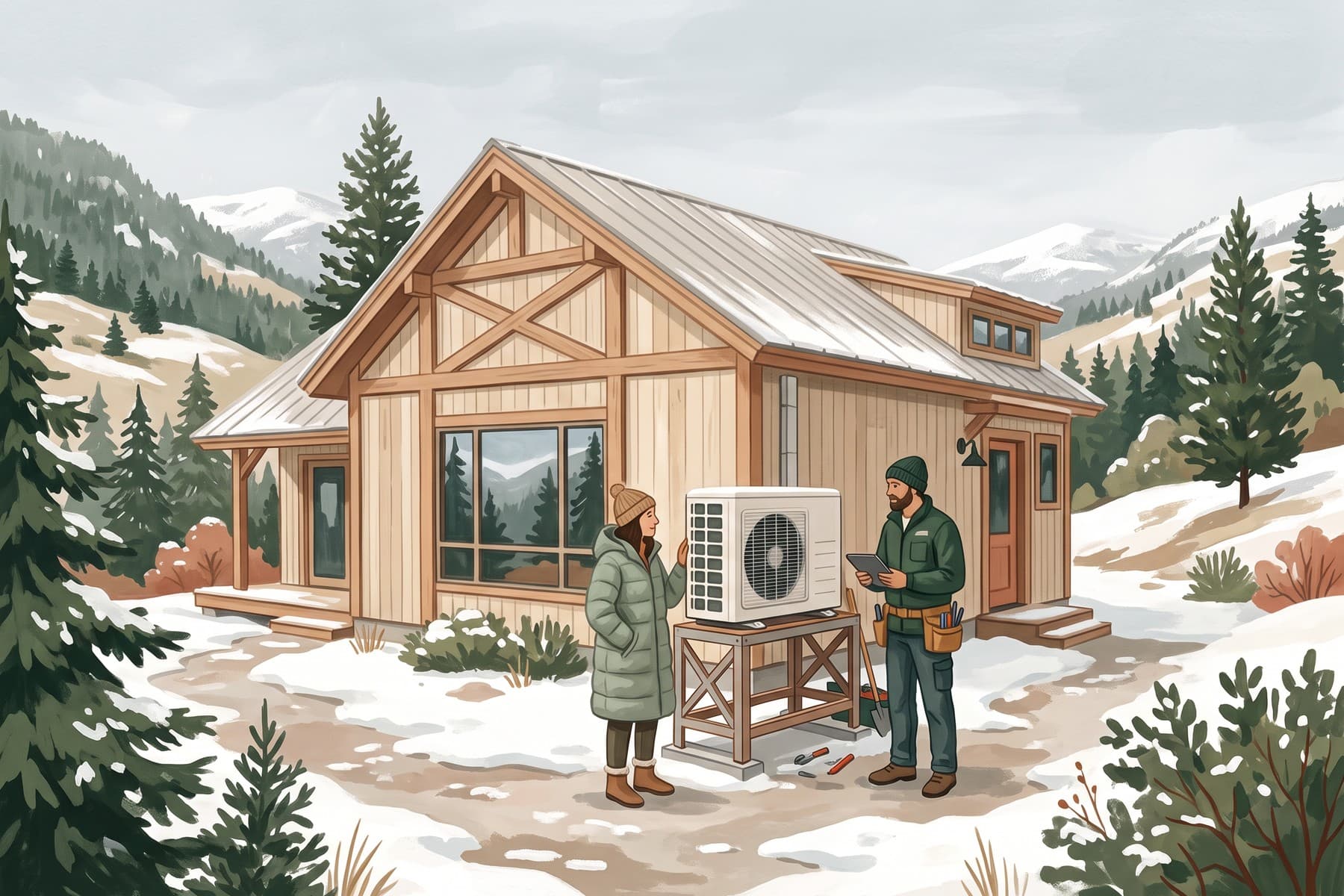
Decide whether this is supplemental heat or a replacement.
For a Montana home with propane, oil, gas, or electric heat, begin by marking the rooms and seasons the new system should serve. A living-area mini-split and a whole-home conversion need different capacity and cost comparisons.
Ask the contractor to use your address and building details in the load calculation. A proposal for a valley home should not be copied to a different elevation or exposure. Have the designer state the winter design temperature, house load, and exact equipment output at that condition.
Use the correct Montana efficiency pathway.
NorthWestern Energy’s Efficiency Plus resources identify Montana incentives for qualifying residential electric and natural-gas customers. Start with the Montana selection and tell the program which utility provides each fuel and what equipment you intend to replace.
Ask whether the relevant offer covers an existing-home conversion, an equipment upgrade, an assessment, or new construction. Those are different categories. A new-construction form should not be used to promise a retrofit rebate, and a NorthWestern offer does not automatically apply to a cooperative account.
NorthWestern Energy: Montana efficiency incentives · Source checked 2026-09-06
Have the quote show the capacity gap.
Request a table with the house’s heating requirement, the heat pump’s output, and the backup contribution at the design temperature. Ask for the manufacturer’s data for the complete indoor/outdoor combination. The minimum temperature at which a machine can run does not, by itself, state how much of the house it will heat.
If existing heat stays, have the contractor show how it is controlled and which rooms it covers. For a partial-home project, ask how bedrooms and plumbing areas outside the new zone will remain heated.
Price service access before choosing a brand.
Ask who provides warranty labor at your address, how travel is billed, and whether the installer stocks common parts. Request a service contact and the procedure for a winter fault. Include safe access to the outdoor unit, snow and drainage planning, and filter maintenance in the handover.
Compare equipment options within that support plan. A lower online equipment price can be misleading if the installed project excludes the local commissioning and service you need.
Keep retained-fuel costs in the worksheet.
List annual propane or oil purchases, actual delivered prices, tank charges, electricity consumption, and servicing. Ask the bidder to estimate the portion of heating displaced by the proposed system. Do not remove the entire fuel bill from a calculation for a single room.
Record gross installation cost, confirmed incentive, electrical and distribution changes, and ongoing backup costs. If the provider offers a special heating tariff or control program, ask for its terms and how the design maintains comfort during any control event. Confirm the incentive before counting it in the budget.
Bring a clear project brief to your installer.
Sources checked September 6, 2026. Confirm current funding and installation-date rules with the administrator before signing. These are selected local pathways, not an exhaustive rebate list.
Start a heating and cooling request with your existing equipment, utility, and comfort priorities. Temperaly does not approve rebates; a request is not an appointment.
Editorial review: 2026-09-06