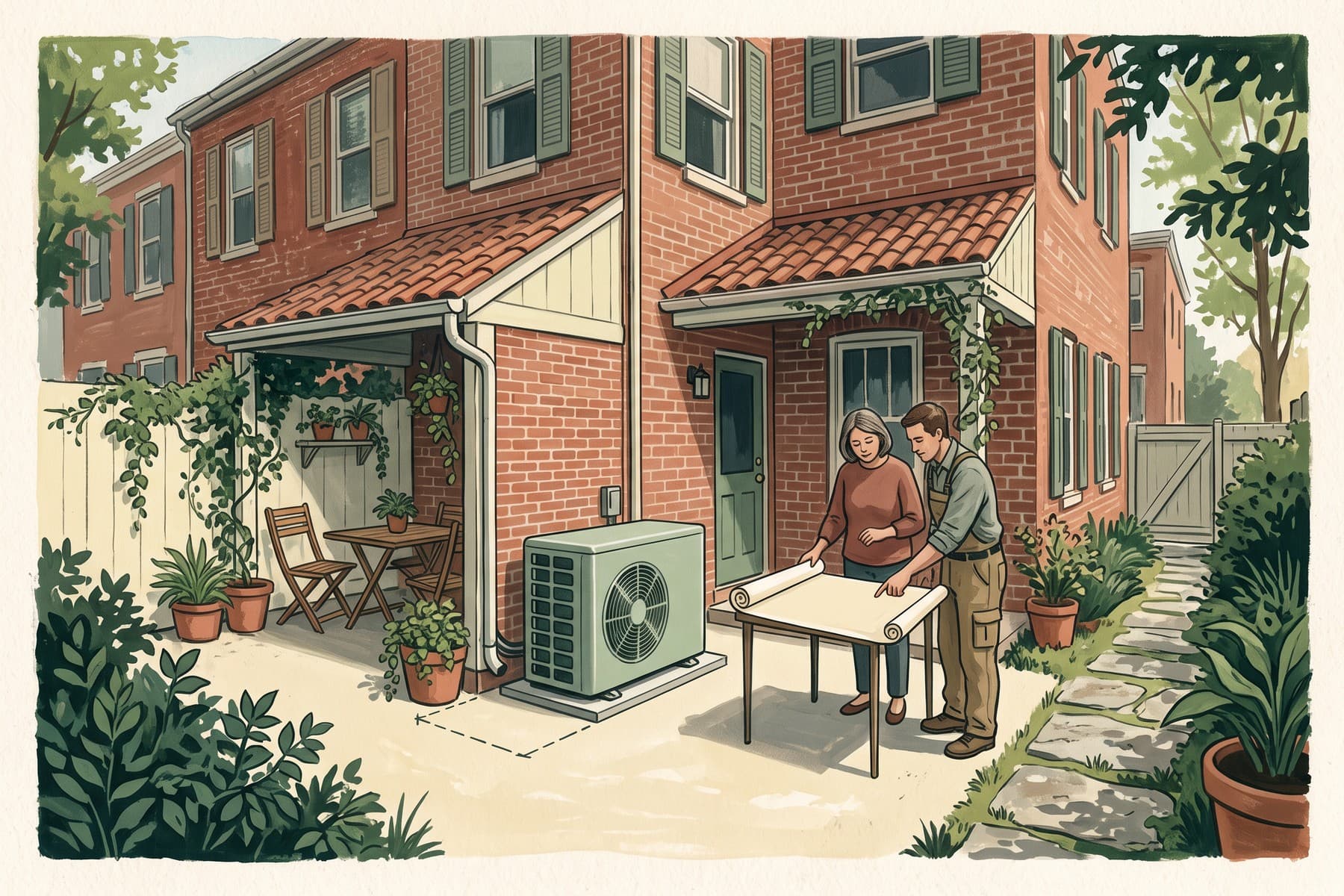
Start with the layout you can actually install.
A Baltimore rowhouse, a detached home with ducts, and an addition without them need different proposals. Mark the rooms to be served, possible indoor-unit locations, outdoor equipment space, and a path for piping and electrical work.
Ask for a drawing before selecting a model. For a narrow courtyard, include service clearances and neighbor-facing sound. For an addition, ask whether the project changes the main system or creates a separate zone. For a condo, obtain the association’s exterior-work process before ordering equipment.
Maryland’s utility route begins with EmPOWER territory.
The Maryland Energy Administration points homeowners in EmPOWER utility territories toward heat-pump rebates through their utility. Its heat-pump page also identifies BeSMART as financing for eligible efficiency work, rather than a cash rebate.
Use the utility on your service bill to find the applicable equipment-only or home-performance pathway. Ask whether an assessment and recommended envelope work are prerequisites. Do not take the maximum from one Maryland utility and apply it to another account or assume financing is money that does not need repayment.
Maryland Energy Administration: heat-pump resources · Source checked 2026-09-06
Do not treat a state-program update as an award.
MEA’s June 9, 2026 update says it is reviewing new federal Home Energy Rebate guidance and evaluating the implications for Maryland’s programs. That update does not provide a household rebate reservation.
Check the state’s current launch and application instructions before including a future HERO or HEAR payment in your budget. A contractor participating in an existing utility program is not automatically authorized under a separate state program.
MEA: IRA Home Energy Rebate updates · Source checked 2026-09-06
Compare ducted and ductless bids by room coverage.
| House situation | Ask the bidder to show |
|---|---|
| Existing central ducts | Airflow, returns, and required duct corrections |
| Rowhouse with limited outdoor space | Equipment location and maintenance access |
| Addition or converted room | Dedicated load and connection to the rest of the house |
| Bedrooms with closed doors | How each room receives heating and cooling |
| Retained boiler or furnace | Backup role and control sequence |
Require the heating load and matched equipment’s cold-weather output even when the immediate goal is summer cooling.
Get the full conversion price before the incentive price.
Have the proposal name indoor and outdoor models, wiring, panel work, piping routes, condensate handling, permit responsibility, and startup tests. Ask whether changing the selected indoor heads would change both capacity and rebate eligibility.
Keep the gross price, confirmed utility rebate, any approved assistance, and financed balance on separate lines. If a whole-home offer requires additional work, compare the cost and benefit of that complete scope with an equipment-only option. Save the assessment and approval documents with the final invoice.
Bring a clear project brief to your installer.
Sources checked September 6, 2026. Confirm current funding and installation-date rules with the administrator before signing. These are selected local pathways, not an exhaustive rebate list.
Start a heating and cooling request with your existing equipment, utility, and comfort priorities. Temperaly does not approve rebates; a request is not an appointment.
Editorial review: 2026-09-06