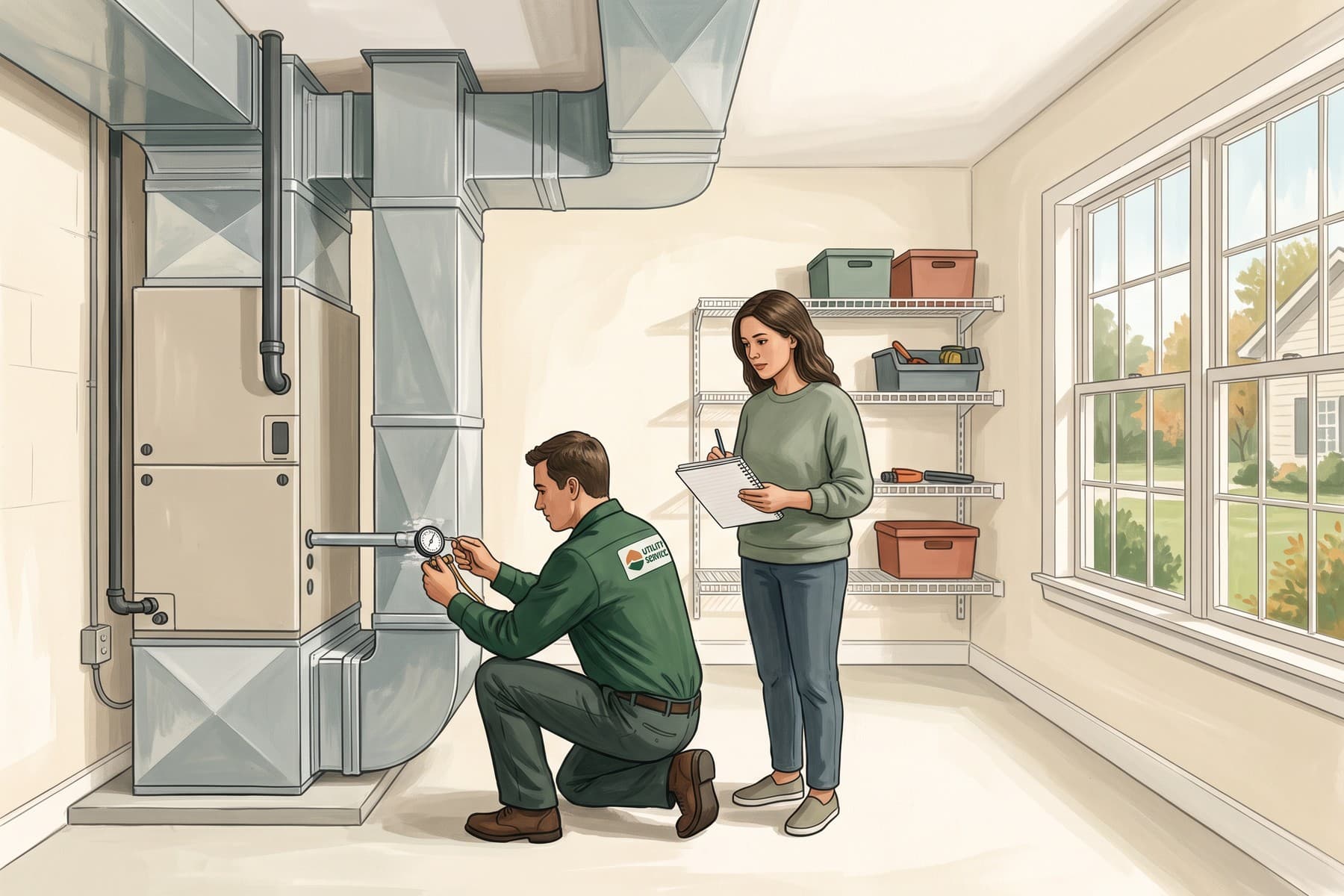
Start with the rooms that do not work.
If one bedroom is uncomfortable while the rest of the house reaches the setpoint, give the contractor that information before choosing new equipment. Write down when the problem occurs, whether doors are closed, and what changed in the house.
For a Louisville or Lexington home with an upstairs addition, ask for a room and return-air review. For a home with accessible crawlspace ducts, include their condition in the inspection. Ask the bidder to separate equipment failure from distribution problems so the replacement scope addresses the complaint.
LG&E and KU list $400 heat-pump rebates.
LG&E and KU’s residential program lists $400 for eligible air-source heat pumps and $400 for ductless heat pumps. The current page limits eligibility to specified rate schedules, including RS, RTOD-D, RTOD-E, RGS, and VFD; the utility cautions that equipment must meet its program qualifications.
Check the account’s rate and the exact model before signing. Apply through the program’s My Account or guest route and keep the required purchase and installation records. A qualifying equipment rebate does not establish that all duct repairs or electrical work are covered.
LG&E and KU: residential equipment rebates · Source checked 2026-09-06
Ask about assistance before choosing a financed replacement.
LG&E and KU also identify WeCare as an income-qualified program offering energy-saving upgrades and weatherization to homeowners and renters without an additional charge. Ask the program what screening and assessment your household needs and whether your specific repairs are eligible.
Do that before committing to a contractor’s financed equipment package. Assistance scope is determined through the program; it should not be represented as an automatic new-system award. Other Kentucky utility accounts need their own program check.
LG&E and KU: efficiency program pathways · Source checked 2026-09-06
Use a diagnosis-to-scope worksheet.
| Observation | Ask the contractor to investigate | Written result |
|---|---|---|
| One room stays hot | Air delivery and return path | Room correction scope |
| Whole house struggles | Load, equipment condition, settings | Repair or replacement rationale |
| Damp comfort at setpoint | Moisture sources and system operation | Humidity-control plan |
| Noisy airflow | Duct restrictions and blower setup | Measured findings and correction |
This is a discussion tool, not a remote diagnosis. Request measurements and a plain explanation before accepting a broad duct-replacement recommendation.
Compare a repaired distribution system with the full upgrade.
Ask for the cost of necessary duct or return work on its own, then with each equipment option. Have the designer use the expected final house condition when sizing the replacement. Keep any insulation or air-sealing work visible in that assumption.
For a heat pump, require the winter output, backup plan, and controls along with the summer rating. At handover, ask for the startup record, filter access, owner instructions, and a clear contact if the original room complaint persists.
Bring a clear project brief to your installer.
Sources checked September 6, 2026. Confirm current funding and installation-date rules with the administrator before signing. These are selected local pathways, not an exhaustive rebate list.
Start a heating and cooling request with your existing equipment, utility, and comfort priorities. Temperaly does not approve rebates; a request is not an appointment.
Editorial review: 2026-09-06