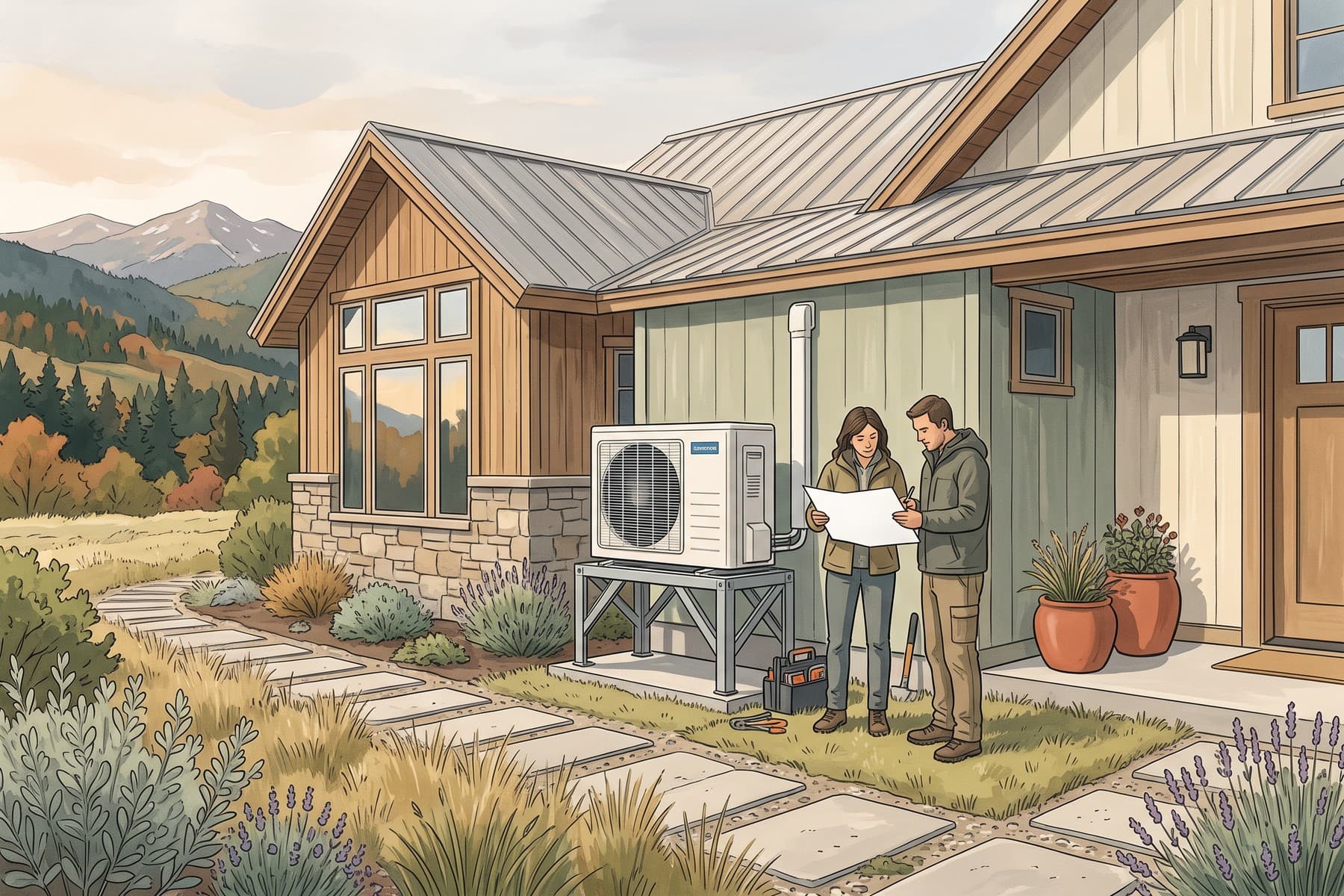
Your existing fuel changes the incentive path.
Take a photo of the present heating equipment and identify whether it uses electric resistance, propane, oil, natural gas, or an existing heat pump. That detail is as important as the new model when checking incentives.
Idaho Power’s existing-home menu separates ductless conversions from ducted air-source systems. Its ductless category starts with electric zonal primary heat; the ducted air-source category lists eligible electric, oil, or propane systems. Do not assume that replacing a gas furnace or an existing heat pump qualifies for the same offer.
Idaho Power: existing-home measures · Source checked 2026-09-06
Read the conversion restrictions before signing.
Idaho Power’s application terms require participating contractors for certain measures and submission within 90 days after project completion. Oil or propane forced-air conversions have an additional condition concerning natural-gas availability. When electric heat is replaced, supplemental heat in the new heat-pump system must be electric.
The terms also say incentives must be part of the purchase decision and are not retroactive. Have the contractor confirm the applicable measure and fuel conditions first. Keep the written program check with the equipment worksheet, invoice, and application receipt.
Idaho Power: current application terms · Source checked 2026-09-06
Compare a valley home and a mountain home through the design.
For a Boise-area home, ask which outdoor temperatures the load calculation uses and how much winter heat the chosen system supplies. For a higher-elevation property, request its own design conditions and an explanation of equipment access, snow, and drainage. A quote prepared for another address is not a substitute.
Ask for the exact matched-system output table and backup capacity. Have the designer state whether the aim is whole-home coverage or partial heating with an existing system retained. Include the thermostat logic and estimated backup use in both the scope and operating-cost estimate.
Do not skip the ducts or room layout.
In a ducted conversion, ask the contractor to inspect accessible supply and return paths and document corrections needed for the proposed airflow. For a ductless project replacing zonal heat, map each indoor unit and the rooms it serves. Ask what happens behind closed doors and which existing heaters remain.
If an addition is the problem, compare a dedicated small system with changes to the main house system. Keep the incentive category for that actual scope; a whole-home conversion offer should not be applied to a supplemental room unit without confirmation.
Make the handover useful for winter.
Request a completed startup checklist, a labeled filter location, and plain instructions for normal heat, backup heat, and a fault. Confirm who provides local warranty service and whether travel is included.
If the bill names another electric utility or cooperative, use its own program and tariff. Idaho Power’s offers are customer-specific even where an installer serves several utility territories. Ask the installer to use your current rates and fuel costs in any savings estimate.
Bring a clear project brief to your installer.
Sources checked September 6, 2026. Confirm current funding and installation-date rules with the administrator before signing. These are selected local pathways, not an exhaustive rebate list.
Start a heating and cooling request with your existing equipment, utility, and comfort priorities. Temperaly does not approve rebates; a request is not an appointment.
Editorial review: 2026-09-06