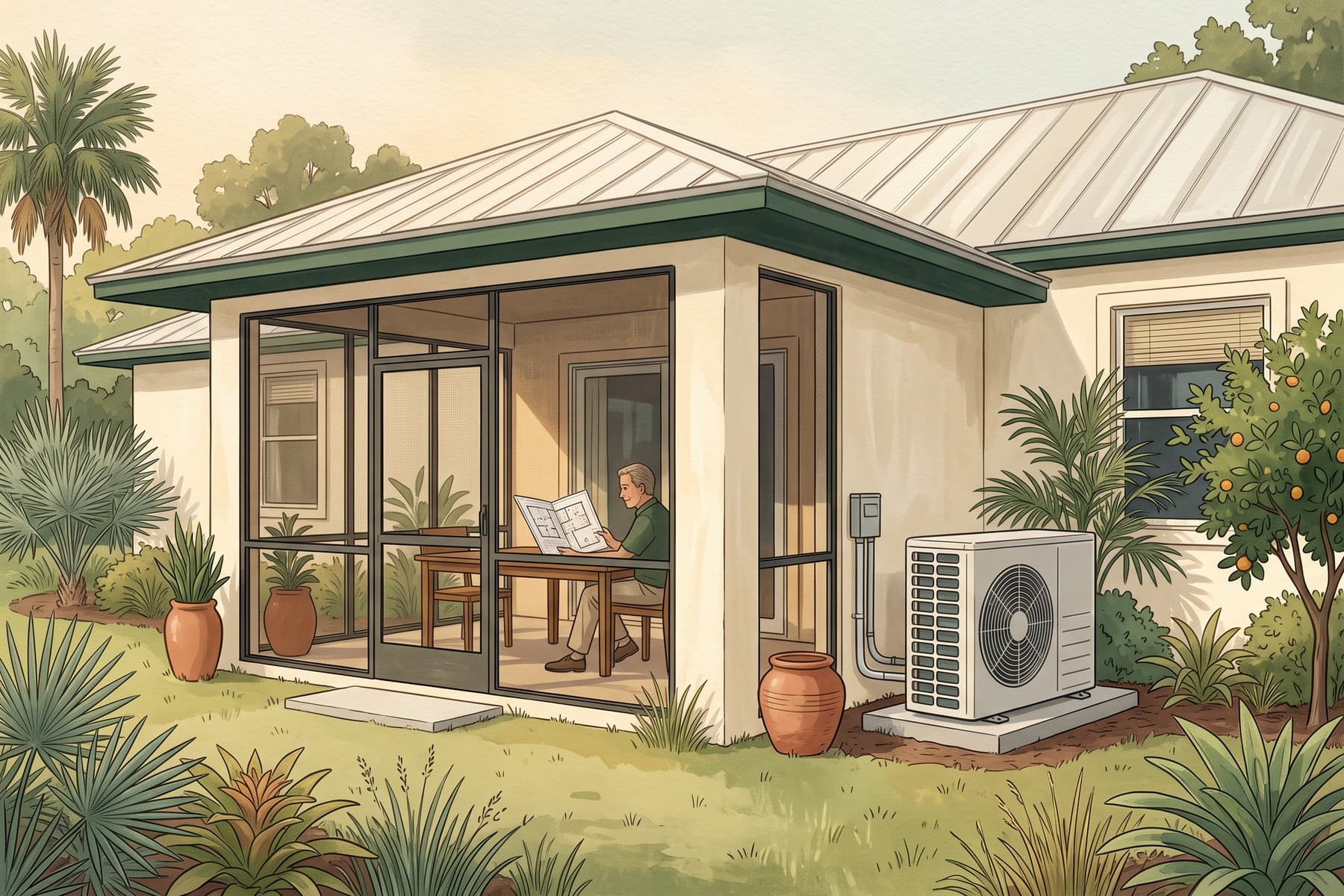
Start with the comfort problem, then the rebate.
A Florida replacement quote should explain both temperature and moisture control. If the house feels clammy at a comfortable thermostat setting, record which rooms feel damp, when it happens, and how long the system runs. Give those observations to the installer before choosing capacity or efficiency.
Lowering the thermostat can leave a humid home cold without resolving the moisture problem. Ask for a plan that addresses humid, milder days as well as the hottest afternoons. A rebate can reduce the price of suitable equipment; it does not establish that the proposed system will fix your home’s problem.
DOE: humidity control in hot-humid climates · Source checked 2026-09-06
A larger AC is not automatically a better fix.
An oversized system can increase summer indoor humidity. Ask the contractor to calculate your home’s heating and cooling needs rather than copy the old unit’s size or use floor area alone.
Request written answers about airflow, return-air paths, duct condition, condensate drainage, and how the proposed system controls moisture at lower cooling demand. If a separate dehumidifier is suggested, have the contractor explain the measured problem it solves and include its installation, maintenance, and electricity use in the comparison.
DOE: HVAC sizing research · Source checked 2026-09-06
Compare complete systems for the same home.
Use this worksheet when requesting bids. These are project questions, not assumptions about every Florida house.
| Quote item | What to ask for |
|---|---|
| Straight-cool AC | Identify the heating equipment that remains and any repair it needs. |
| Heat pump | Identify the indoor unit, outdoor unit, controls, and backup heating included. |
| Comfort | Explain how the design addresses your humid rooms and uneven temperatures. |
| Coastal exposure | Provide manufacturer placement and corrosion-maintenance guidance for the actual address. |
| Installation | Itemize ducts, electrical work, permits, removal, and commissioning. |
Ask each bidder to price the same scope so a lower equipment price does not conceal work excluded from the proposal.
FPL: a $200 invoice credit for a qualifying system.
FPL advertises a $200 instant credit when a Participating Independent Contractor installs a qualifying new residential A/C system. The public offer requires both indoor and outdoor units and a rating of at least 15.2 SEER2. The contractor puts the credit on the invoice.
Before signing, have the contractor confirm your account, matched equipment, and installation qualify. FPL’s program standards also cover heat pumps; do not assume a particular model is eligible simply because it carries a heat-pump label. Ask to see the rebate line separately from any contractor discount.
FPL: A/C rebate · Source checked 2026-09-06
Check the account and recent rebate history.
FPL’s HVAC standards require an active residential account and exclude a repeat rebate for the same HVAC system within two years. Have the participating contractor check these conditions before including the credit in your budget. This is an FPL customer offer, not a statewide Florida payment.
FPL: residential HVAC program standards · Source checked 2026-09-06
Duke Energy Florida: complete the Home Energy Check first.
Duke’s Florida rebate portal requires a Home Energy Check before the project and says it must have been completed within the past 24 months. Start there while the old equipment is still available for review.
Ask Duke or the installer which current HVAC category fits your existing heating equipment and property type, and which evidence to keep. Do not use a maximum from a different utility or an older advertisement as your approved amount.
Duke Energy Florida: rebate application prerequisites · Source checked 2026-09-06
Florida’s state application is still a future step.
At this review, the Florida Energy Saver Program homepage says applications are expected to open in the future. Registering a profile is an update request, not a rebate reservation. Keep potential state assistance separate from confirmed utility credits when comparing bids.
FDACS: Florida Energy Saver Program · Source checked 2026-09-06
Keep old tax-credit promises out of a new quote.
The federal 25C home-improvement credit ended for property placed in service after December 31, 2025. Exclude it from a 2026 installation budget.
IRS: Form 5695 instructions, credit termination · Source checked 2026-09-06
Turn the research into a clear next step.
Sources checked September 6, 2026. Offers can change; confirm the installation-date rules and funding with the program before committing. Temperaly does not approve rebates.
Bring the questions above to your installer, or start a heating and cooling request. A request is not an appointment or a rebate application.
Editorial review: 2026-09-06