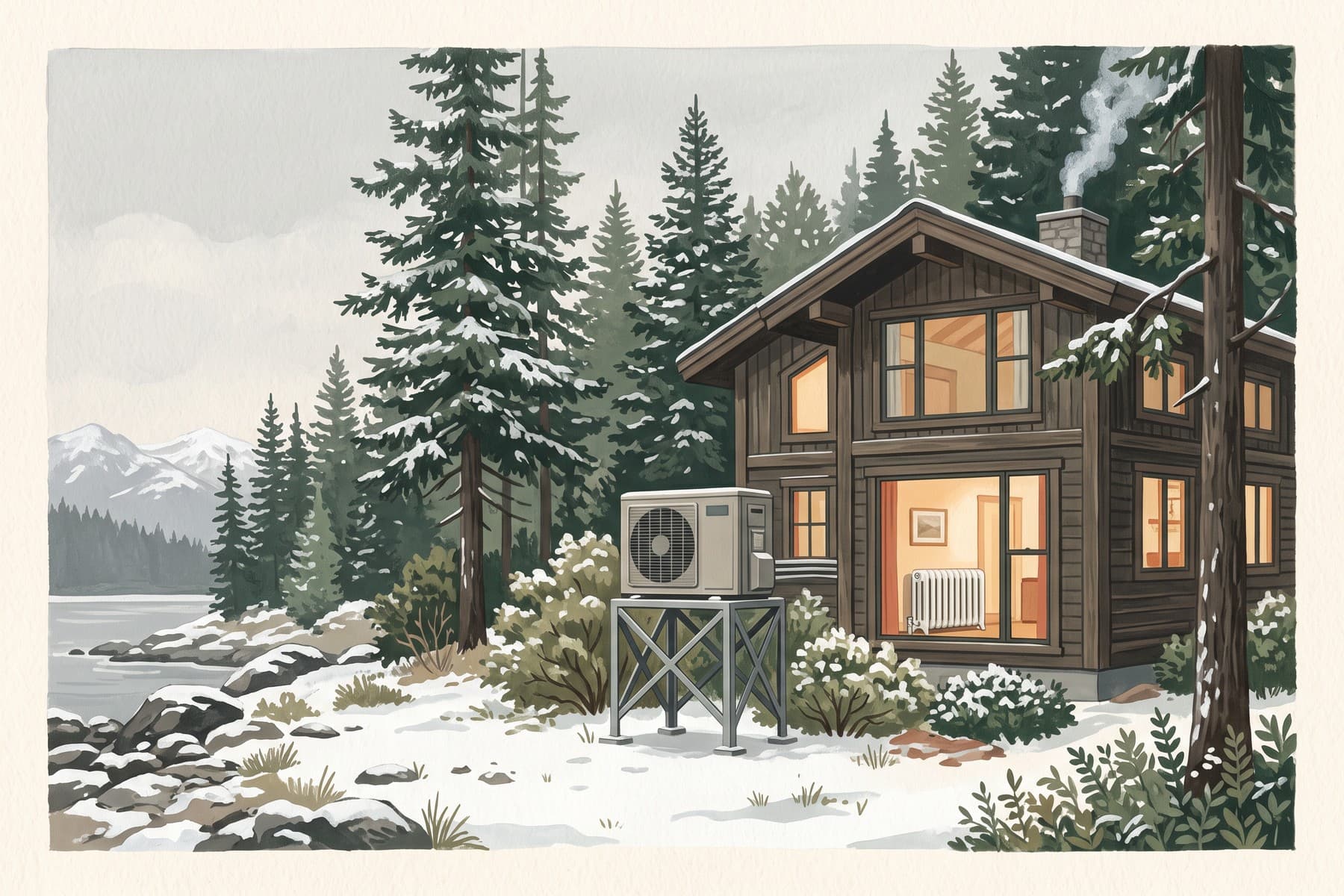
Choose what the heat pump is supposed to cover.
Start by deciding whether you want shoulder-season heat for a living area, a system for several rooms, or a whole-home replacement. Put the rooms and expected operating season in writing before choosing equipment.
AHFC’s Seward research describes a milder coastal setting and households using several heating fuels. It is a useful local example, but its individual homeowner experience is not a savings estimate for Fairbanks or a remote community. Ask bidders to use your community, electric tariff, fuel deliveries, and building condition rather than an Alaska-wide average.
AHFC: Seward heat-pump research · Source checked 2026-09-06
Keep three winter questions separate.
A machine’s lowest operating temperature, its heating output at that temperature, and the house’s heat requirement are different entries on the proposal. Ask for all three. The output must be for the exact indoor/outdoor combination, with the assumptions and manufacturer’s table attached.
For a coastal living-room project, map how closed bedrooms receive heat. For an interior Alaska project, ask the designer to show the coldest design condition and the portion supplied by retained equipment. A summer-only test does not demonstrate the winter arrangement. Ask who will return to check operation during cold weather.
Check assistance by project type.
AHFC’s energy resources portal lists a $10,000 New Home Construction Rebate for qualifying new construction. That is not a general $10,000 payment for putting a mini-split in an existing house. Follow the program’s actual new-home energy-rating and application process if you are building.
For an existing home, use AHFC’s efficiency resources to ask about an energy rating and income-qualified weatherization. Have the program identify approved work before purchasing equipment; a contractor’s recommendation is not an assistance award.
AHFC: energy resources and new-construction program · Source checked 2026-09-06
Price backup ownership and service access.
Keep a line for annual servicing of any retained boiler, furnace, or stove system. Request the planned changeover control and a simple owner instruction sheet explaining what to do if the heat pump is unavailable.
Before ordering, ask who stocks parts, whether your address is within the installer’s service area, and how travel is billed. Include the outdoor stand, snow and drainage plan, electrical work, and access for cleaning in the installation price. Have the contractor explain the manufacturer’s clearances rather than placing the unit beneath a convenient roof runoff point.
Use a small, honest operating-cost comparison.
List your actual annual fuel purchases and electricity usage, then ask the bidder to estimate the share of heat this project will displace. Compare that avoided fuel cost with added electricity and retained equipment costs. If the plan only serves two rooms, reject a calculation that assumes the whole fuel bill disappears.
Keep the existing system available until the contractor has tested the agreed heating coverage and explained the controls. Any decision to remove it should follow the documented design and local requirements.
Bring a clear project brief to your installer.
Sources checked September 6, 2026. Confirm current funding and installation-date rules with the administrator before signing. These are selected local pathways, not an exhaustive rebate list.
Start a heating and cooling request with your existing equipment, utility, and comfort priorities. Temperaly does not approve rebates; a request is not an appointment.
Editorial review: 2026-09-06